Reading Great Buildings
A mechanical and stylistic understanding of intact historical structures.
Classical Engineering
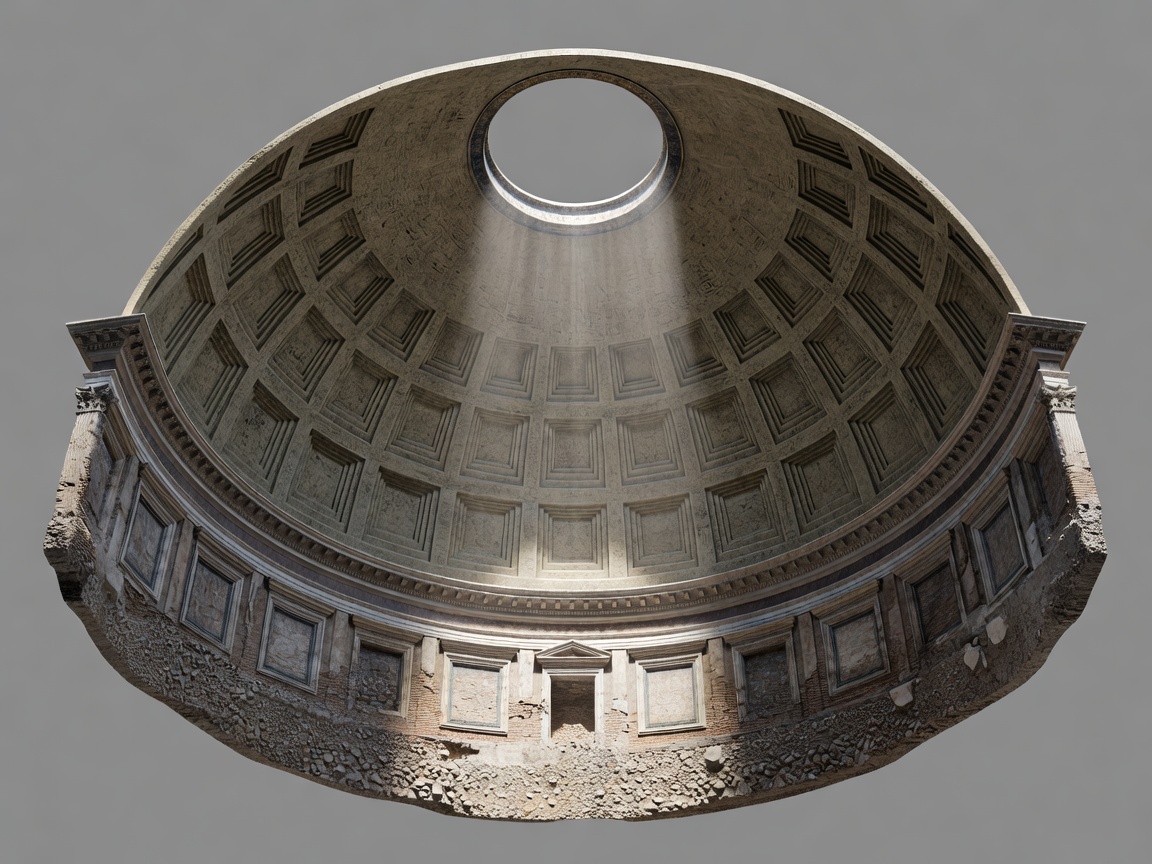
The Pantheon
The world's largest unreinforced concrete dome. The structural integrity relies on the graded density of the concrete aggregate—heavy basalt at the foundation, transitioning to lightweight pumice near the 9-meter oculus. The coffered ceiling is not merely decorative; it significantly reduces the dead weight of the dome.
- Era: Trajan / Hadrian (c. 113–126 CE)
- Span: 43.3 meters in diameter
Gothic Verticality
Flying Buttress Systems
Notre-Dame de Paris exemplifies the externalization of structural load. By transferring the outward thrust of the heavy vaulted ceilings to external stone supports (buttresses), the interior walls could be opened up for expansive stained glass, creating the quintessential Gothic aesthetic of light and height.
Fan Vaulting
Focusing on the Henry VII Lady Chapel. The intricate, web-like fan vaulting is a uniquely English late-Gothic development. The pendants dropping from the ceiling act as structural wedges that lock the ribs in place while creating an illusion of weightless suspension.
Modernist Intervention
Hyperboloid Geometry
Antoni Gaudí's unfinished minor basilica breaks from Gothic tradition entirely. Instead of external supports, Gaudí engineered interior columns that branch like trees, perfectly aligning with the lines of gravity to support the paraboloid vaults. Visiting the structure requires observing the interplay between these ruled geometries and the strict directional casting of natural light through the tinted glazing.