Looking at Art
Technical and historical records of European canvas and sculptural exhibits.
Italian Renaissance Collections
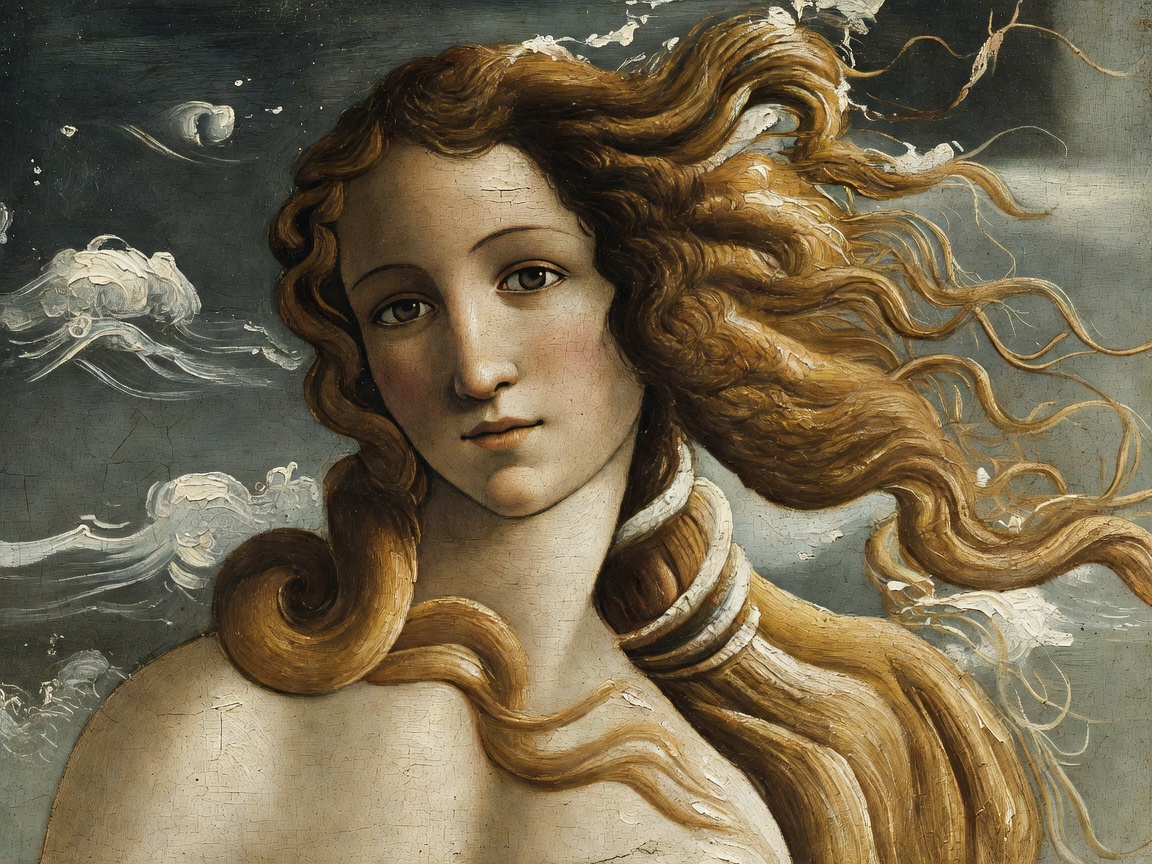
The Birth of Venus (Sandro Botticelli)
Unlike many of its contemporaries painted on wood panels, this late 15th-century work was executed on canvas. The index notes the early use of alabaster powder mixed into the tempera paint, giving the surface a distinct luminescent quality when observed under gallery lighting.
- Medium: Egg tempera on canvas
- Dimensions: 172.5 cm × 278.9 cm
- Display Context: Room 10-14, climate-controlled glass casing.
Northern European Masters
The Night Watch (Rembrandt van Rijn)
Renowned for its colossal scale and dynamic composition, breaking from the traditional static military portraiture of the 17th century. The painting was trimmed in 1715 to fit a new location, altering its original balance. Current institutional observation often involves live restoration tracking (Operation Night Watch) visible to the public behind glass.
Girl with a Pearl Earring (Johannes Vermeer)
Categorized historically as a 'tronie' rather than a portrait—a study of facial expression and exotic costume. Technical scans reveal that the dark background was originally painted as a deep green curtain, the pigments of which have degraded over centuries to a uniform black.
Spanish Royal Collections
Las Meninas (Diego Velázquez)
A complex structural achievement in visual composition from 1656. The painting functions as an intellectual argument for the nobility of the painting profession itself. The spatial arrangement requires the viewer to stand at the exact vanishing point, effectively placing the observer in the position of the King and Queen reflected in the distant mirror.
- Medium: Oil on canvas
- Spatial Geometry: Single-point perspective, internal light sourcing.