Memory in Public Space
Analysis of monumental civic installations and their physical command of urban sightlines.
Industrial Era Landmarks
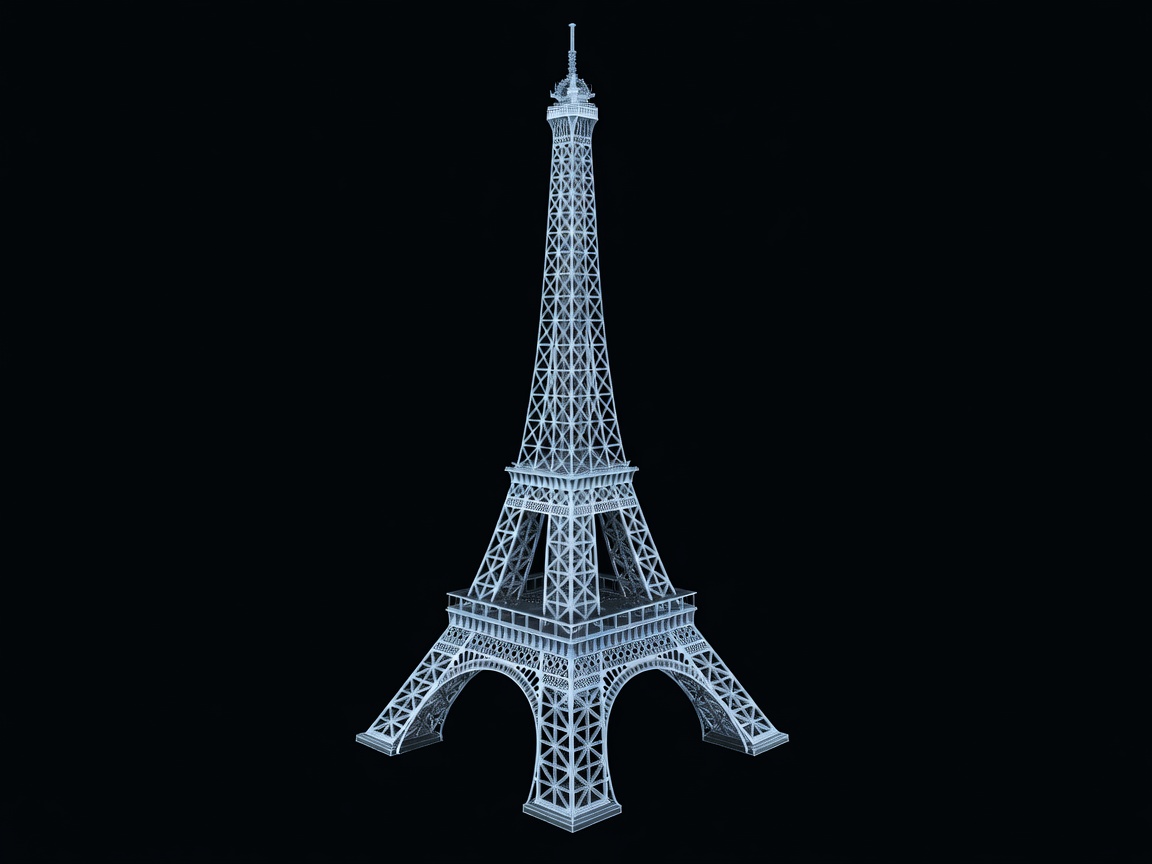
The Eiffel Tower
Constructed for the 1889 Exposition Universelle. The tower serves as a pure demonstration of puddle iron properties and wind resistance. The open lattice structure ensures that wind pressure is absorbed safely, rather than acting as a solid sail. Its placement anchors the visual axis connecting the Trocadéro to the École Militaire.
- Material: 7,300 tonnes of wrought iron
- Designer: Maurice Koechlin, Émile Nouguier, Gustave Eiffel
Civic Gates & Fountains
Brandenburg Gate
A neoclassical monument modeled after the Propylaea of the Acropolis. Structurally, it consists of 12 Doric columns creating five passageways. Its historical significance shifts based on its orientation; it was integrated into the Berlin Wall structure during the Cold War, serving as a boundary rather than a passage.
Trevi Fountain
An urban stage set carved from Travertine stone, grafted onto the facade of Palazzo Poli. It serves as the terminal point of the ancient Aqua Virgo aqueduct. The monument's overwhelming scale relative to the small piazza forces viewers into close proximity, maximizing the auditory impact of the cascading water.
The Atomium
Constructed for the 1958 Brussels World's Fair. It represents an iron crystal cell magnified 165 billion times. The nine stainless steel-clad spheres are connected by tubes enclosing escalators, forming a habitable sculpture that dominates the northern Brussels skyline.